Under Our Own Tuscan Sun
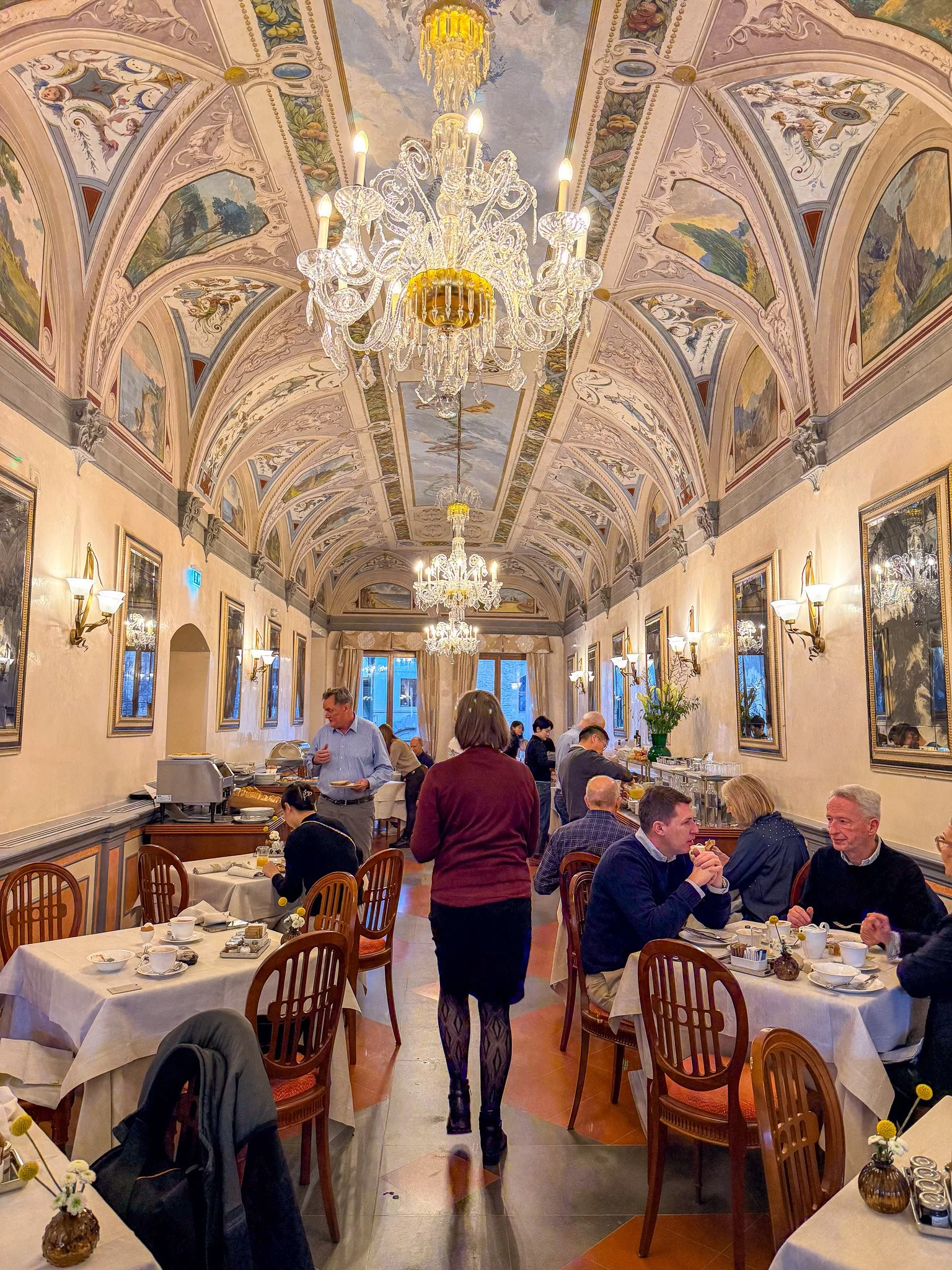
Breakfast at the Hotel degli Orafi
After a restful night in the hotel, I went to the hotel’s breakfast room. I mean, just look at this place. I know I posted this photo last week, but I wanted to elaborate on its history a bit further. So, the story goes that the architect who designed the famous double shell dome of the Cathedral of Santa Maria del Fiore, known colloquially to us all as the Duomo, was Filippo Brunelleschi. My hotel was formerly his house and was built when he lived in Florence in the early 1400s. I’m not sure if this room was where he also ate his breakfast, and I’m pretty sure he never had a cappuccino and a cornetto in here, but I am confident that he walked these rooms. And because I am forever curious, I just looked up what he probably did eat for breakfast, and to my satisfaction I have discovered that it was most likely bread, soaked in wine. Breakfast of champions or of Italian architects, apparently.
My crew, Mark, Marie, Eric, and Patricia, had tickets to actually walk between those double domes that morning. I have seen the YouTube videos of what that looks like and it is amazing. In order to take weight off of such a wide expanse of space that the dome had to traverse, Brunelleschi, designed a lighter outer shell and then an inner shell, which was constructed of bricks. There is a staircase leading to the dome and then stairs in between the two shells rising to the top of the dome where there is a viewing terrace. My friends couldn’t wait to see it, but having heard the word ‘stairs’ too many times in one sentence, I opted to go out photographing and decided to meet up with them afterwards.
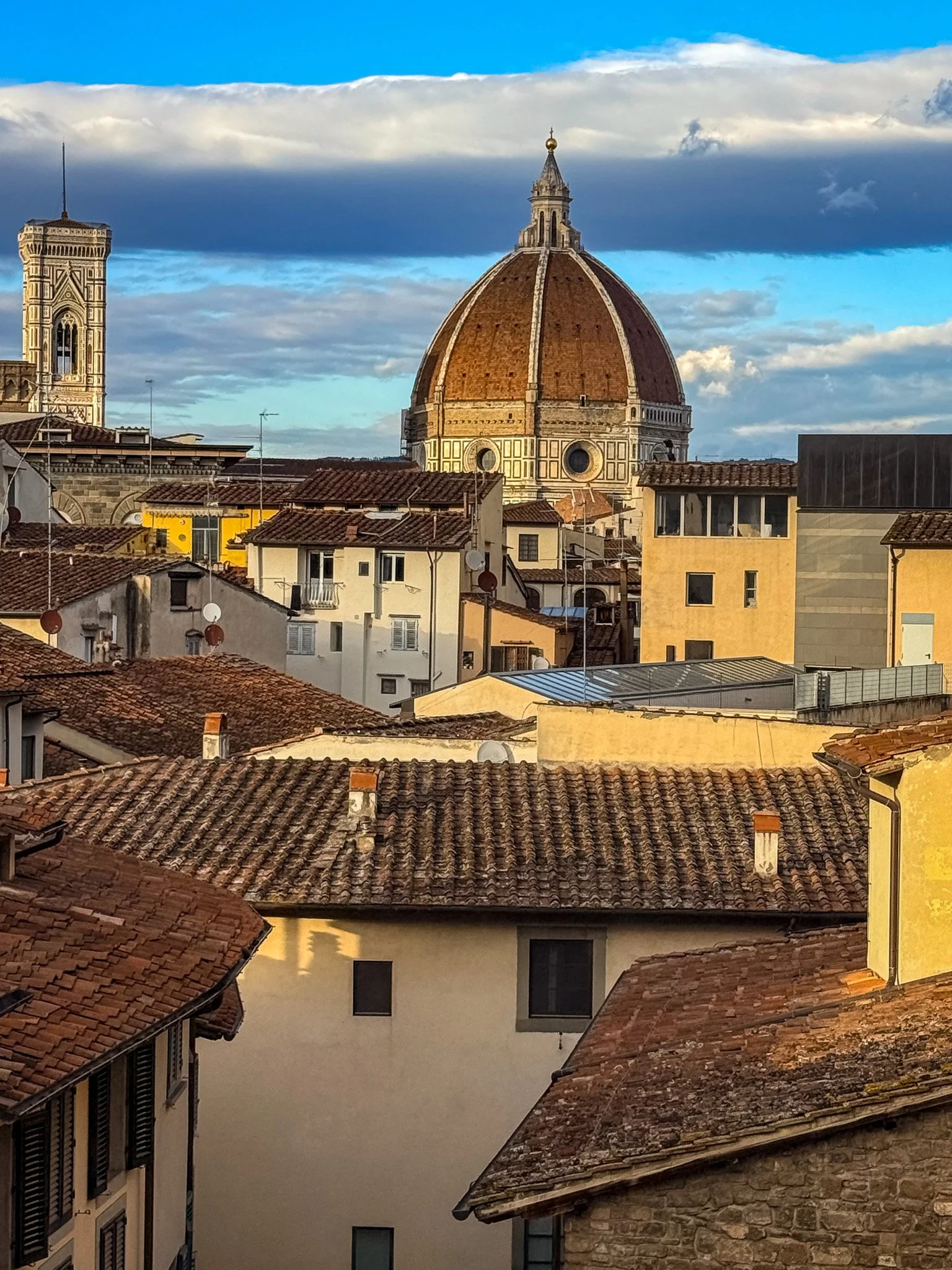
The Duomo of Firenze
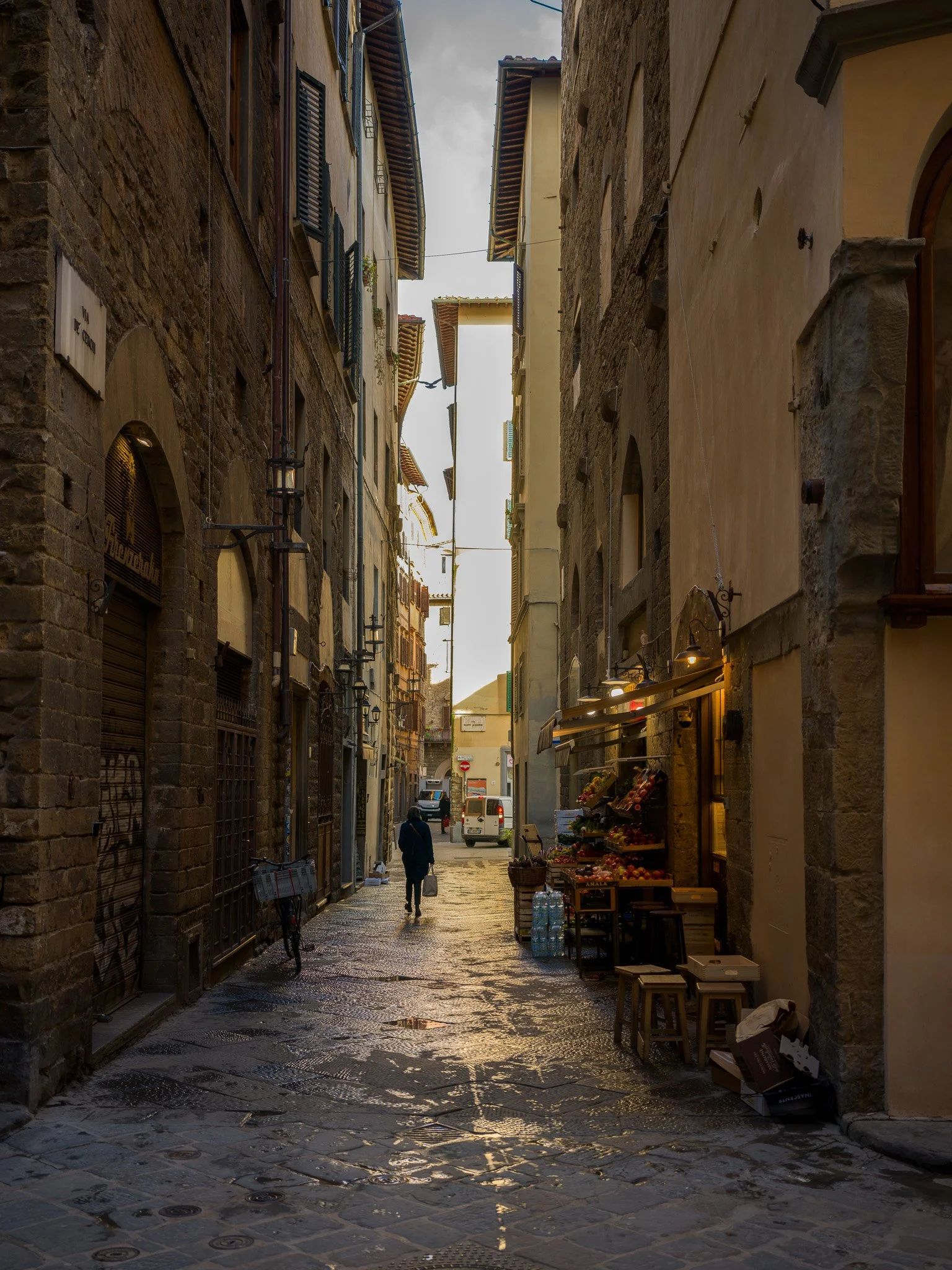
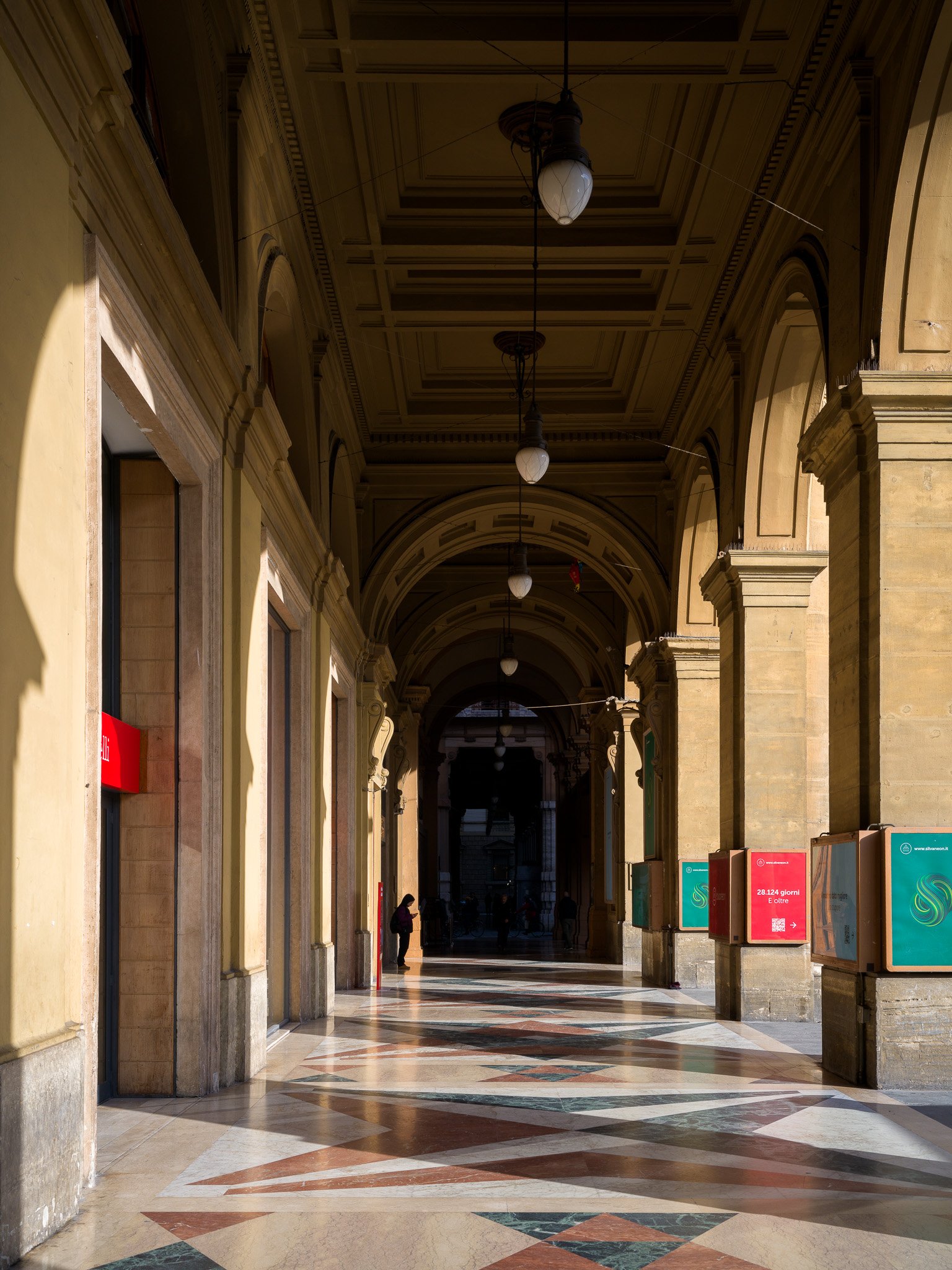
Old Florence, like many medieval European cities and villages, was built at a scale for human beings, horses, and carts. The ‘roads’ are little more than alleyways, with high walled living structures that rise three or four floors. They also have the added benefit of creating shade in the hot summers since the buildings are so close together, and this creates a photographer’s playground of shadow, chiaroscuro, and pops of color. Slivers of light illuminate pieces of wall or ground like a stage spotlight as they slice down a street. Human beings living their lives, on their way to appointments, or merely running errands, are cast in silhouette. I was mesmerized and really couldn’t get enough of it, so I meandered aimlessly. In hind sight, I see that I kind of made the same image over and over, but that’s how it goes when you’re a photographer and you start pulling on a visual thread.
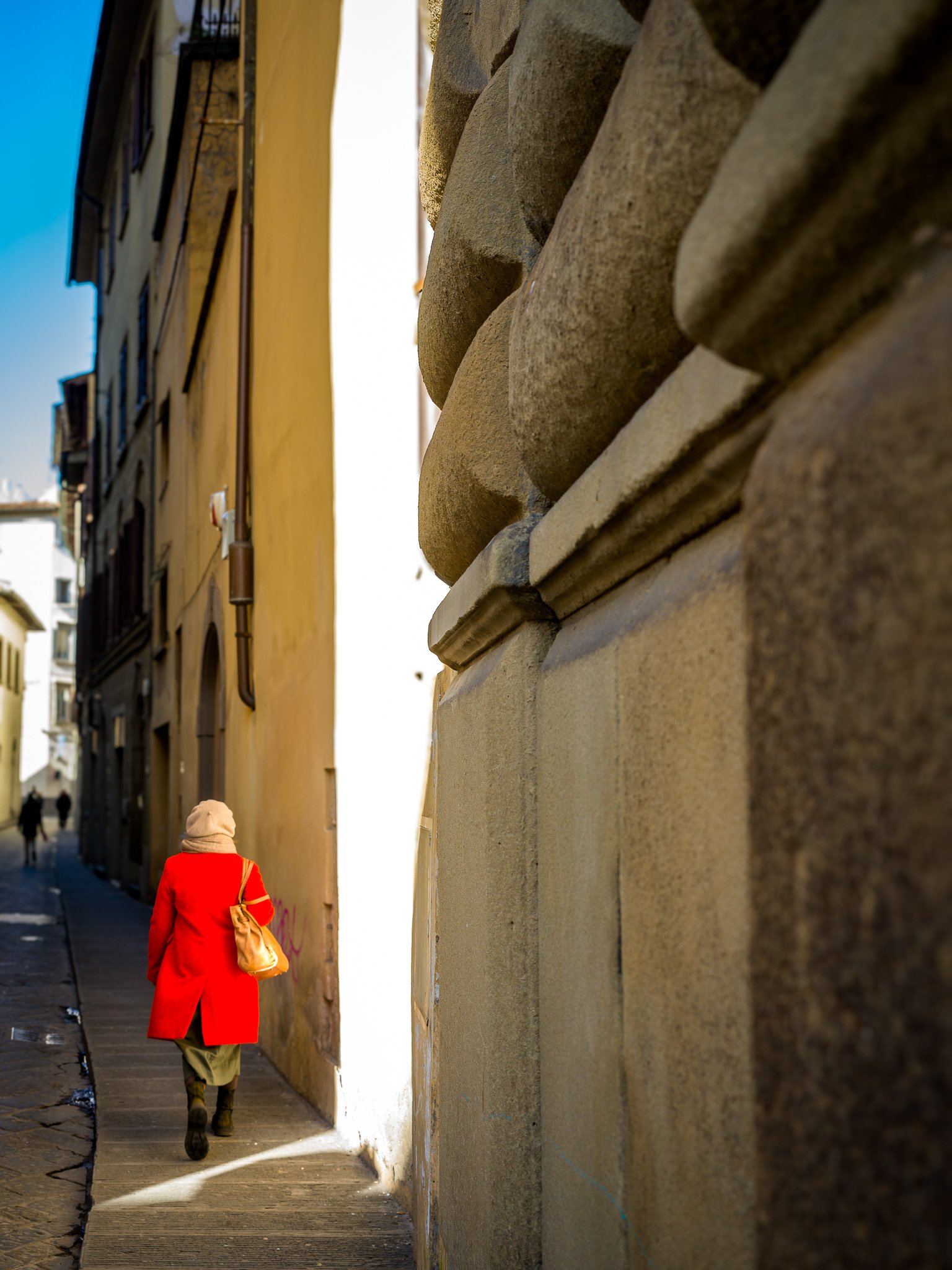
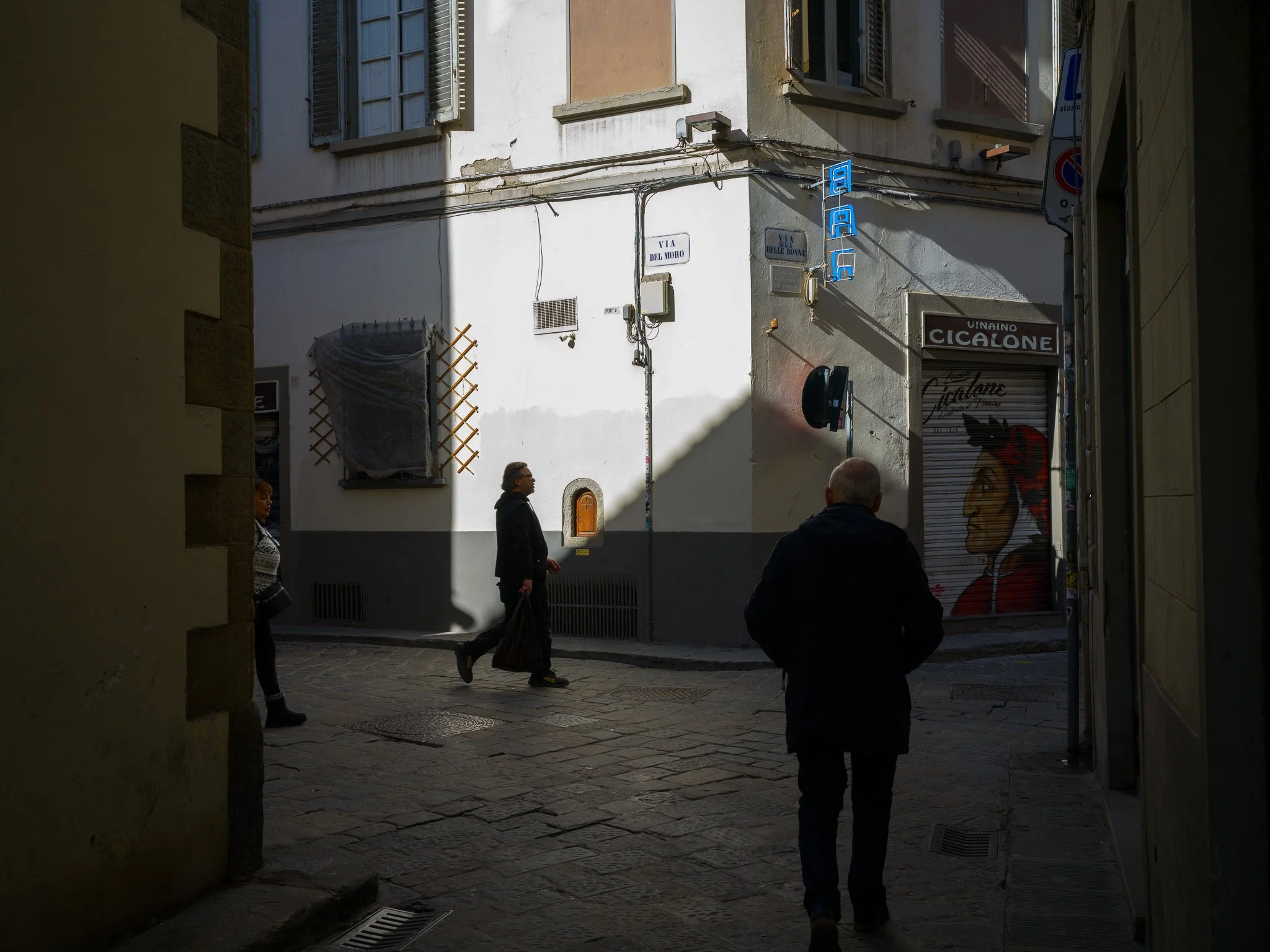
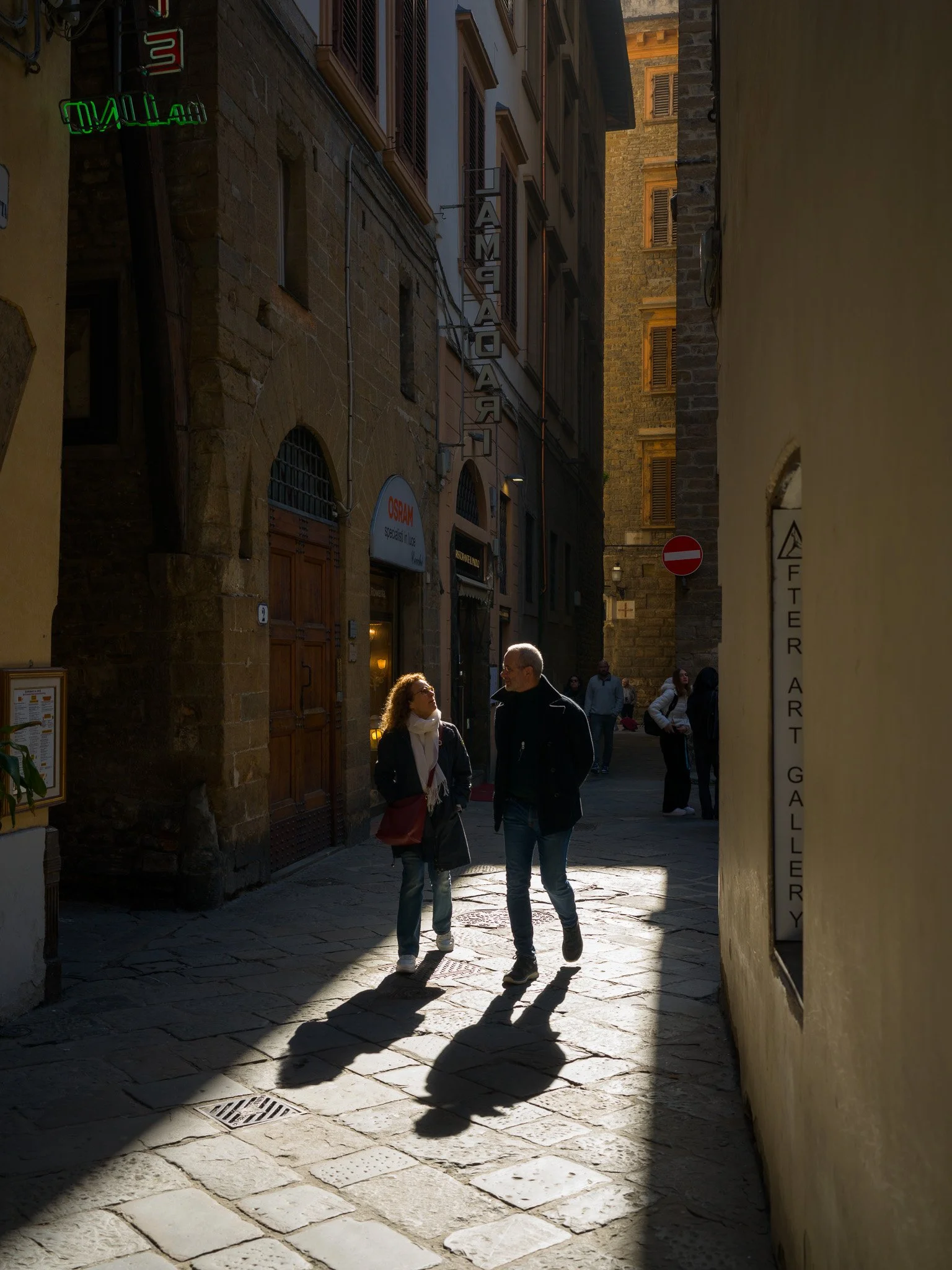
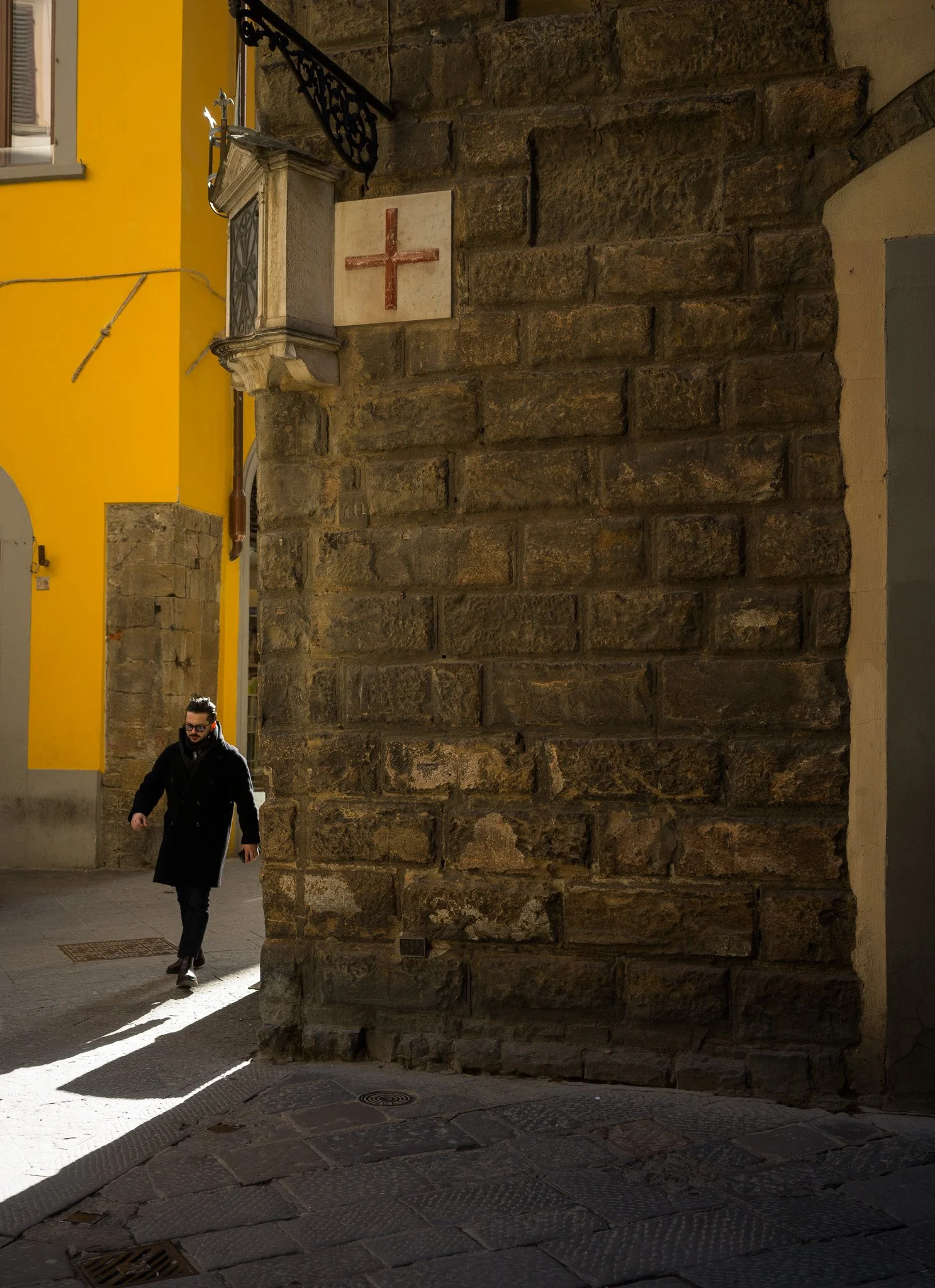
When I did finally meet up with them, I learned that they missed their group guide at the appointed location due to a mixup and ended up missing their tour entirely. Instead, they decided to go the Florence Academy Gallery to see The David. Now that I would have liked to see. I have seen the false one in the Piazza della Signoria in front of the Palazzo Vecchio in Florence, and I’ve seen another one in Mexico City, too, at the Soumaya Museum, but I haven’t experienced the real one.
When we did finally meet up that afternoon it was at the Uffizi Museum, which was literally just outside my hotel door. I was so happy to see them. It had been just about a year since the last time and while I love living in Europe and have no intention of moving back anytime soon, I really miss my friends and my family. Fortunately, they keep coming this way to visit. You all know that feeling of no time passing between good friends and things just pick up exactly where you’ve left them.
The Uffizi. Just wow. We saw Caravaggio’s Medusa Shield and his Bacchus. Botticelli’s Birth of Venus and Primavera (The Spring), Giotti, Michelangelo, Donatello, the famous double portrait of the Duke and Duchess of Urbino by Piero della Francesca, the sculpture hallway on the third floor, and the views of the city from the arcade windows. I was taken by this painting by the German artist, Albrecht Dürer, made in 1504. If you know anything about Dürer, well two things about him, it was he was insanely gifted for the times (Just look at that detail, dimension, and color) and the other was he knew it and had a serious Jesus complex because of it (That’s basically him in the painting playing the role). He also had Hollywood hair.
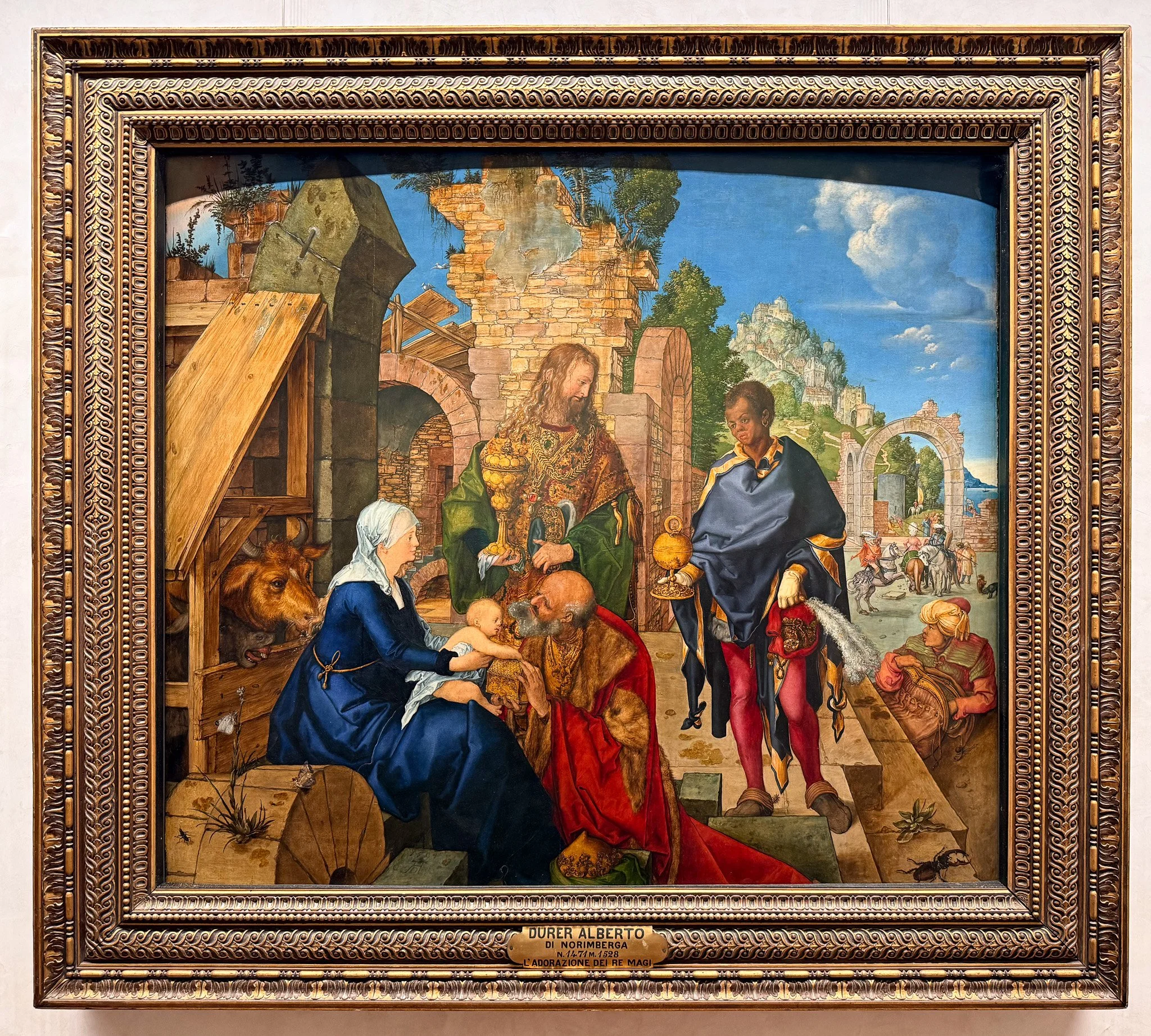
Adoration of the Magi, Albrecht Dürer, 1504
We were all humbled by the artwork and a bit overwhelmed and reverent at first, until I started making comments about the strange looking babies we saw in the many paintings. These babies ranged from emaciated-looking to weirdly greenish, long, and skinny. Some of them were just laying on the ground like someone forgot their luggage. Once we got going it was an hour of “dead baby” jokes told under our breath. Yes, wholly inappropriate but absolutely hilarious. Passing through the centuries of artwork, it appears that it wasn’t until at least the 17th-century that the babies seemed to plump up into the cherub-shaped little Michelin men that we now recognize as normal and healthy. I mean how many old religious paintings of necrotic babies can one take without the need to lighten the mood? I’d say five.
After the Uffizi, which was incredible despite our discreet juvenile behavior, we were all hungry. Earlier in the day when I was wondering around with my camera, I popped in and made a reservation at La Buchetta. It caught my attention the evening before when I was out making photographs because the restaurant has covered its wine window door with glass giving a view through to the kitchen where their chefs were cutting thick steaks of aged Florentine beef as a kind of street theater. You’re walking down a darkened street and out of your peripheral vision a flash of metal, downward blur, and somewhat muffled “thump!” Talk about entertainment! I stood there watching and making photos. I guess I caught their attention, too, and got a thumbs up when I was finished.
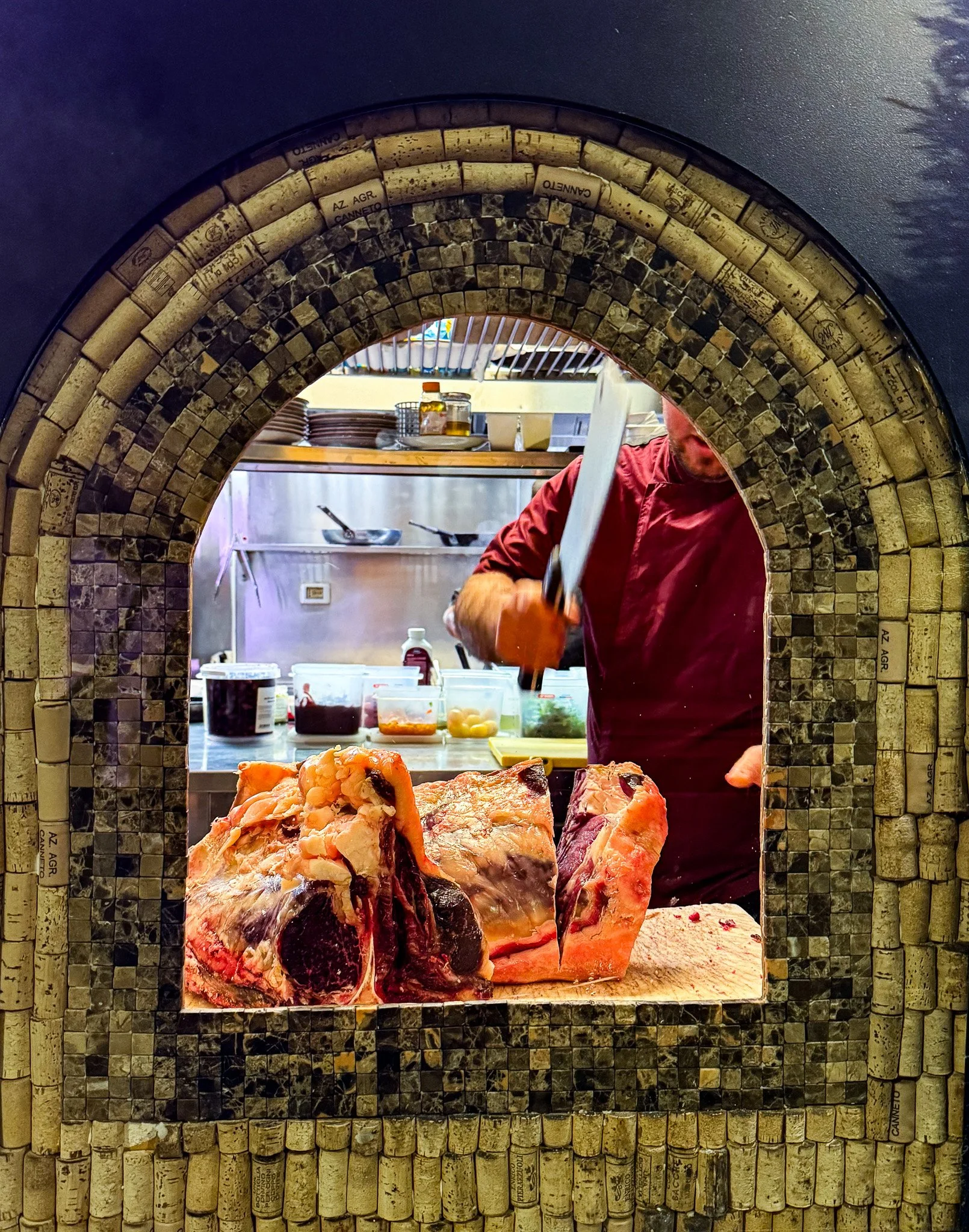
Florentine steak
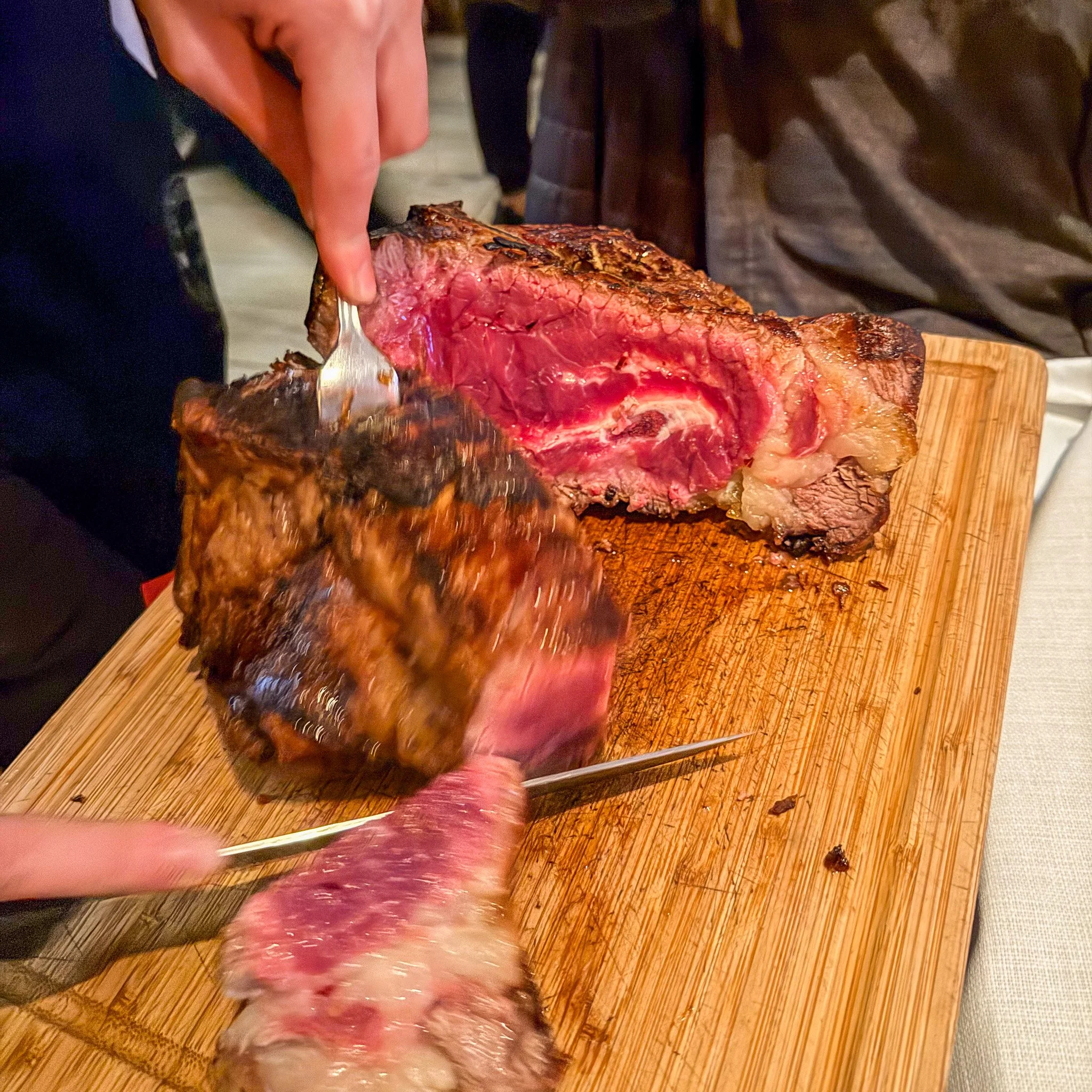
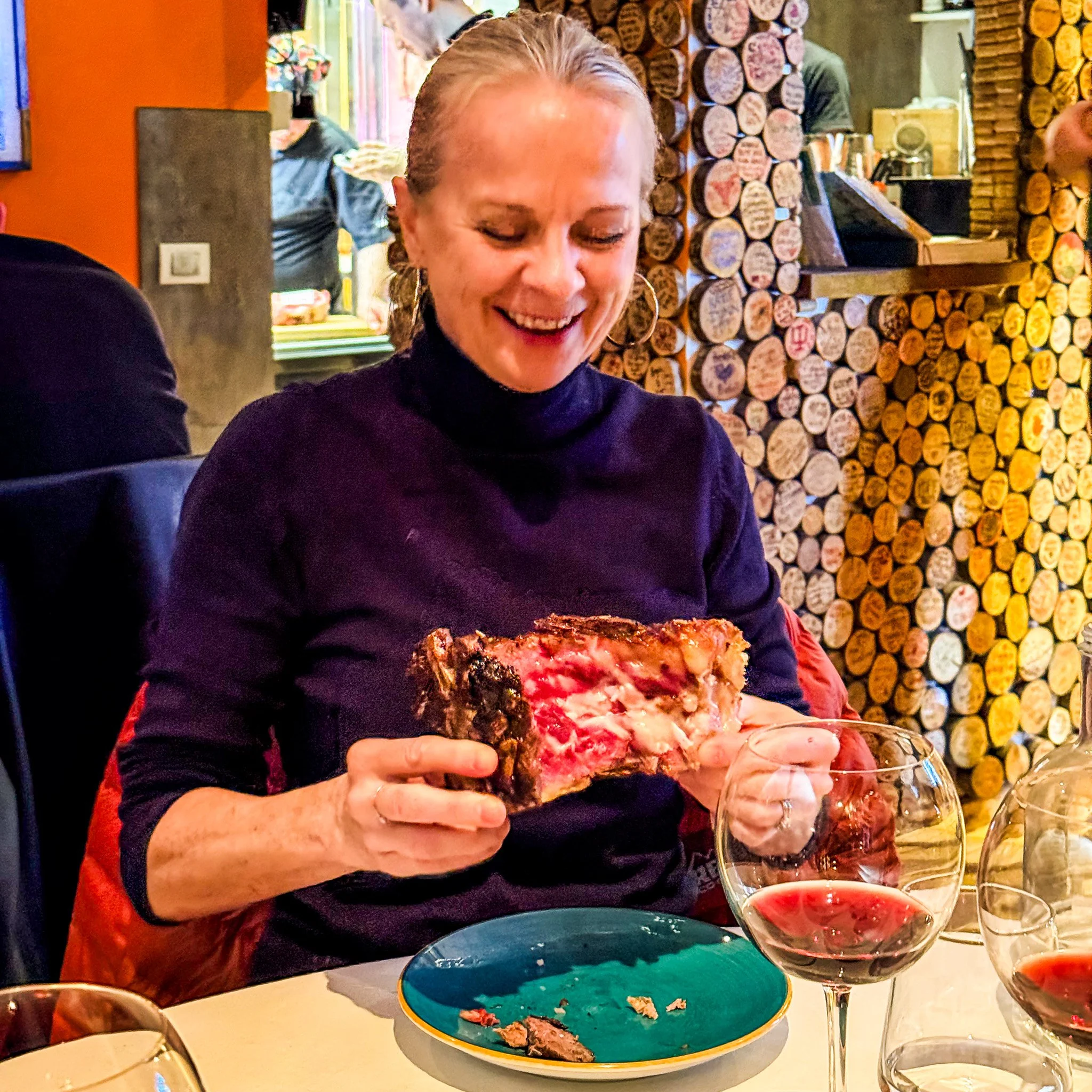
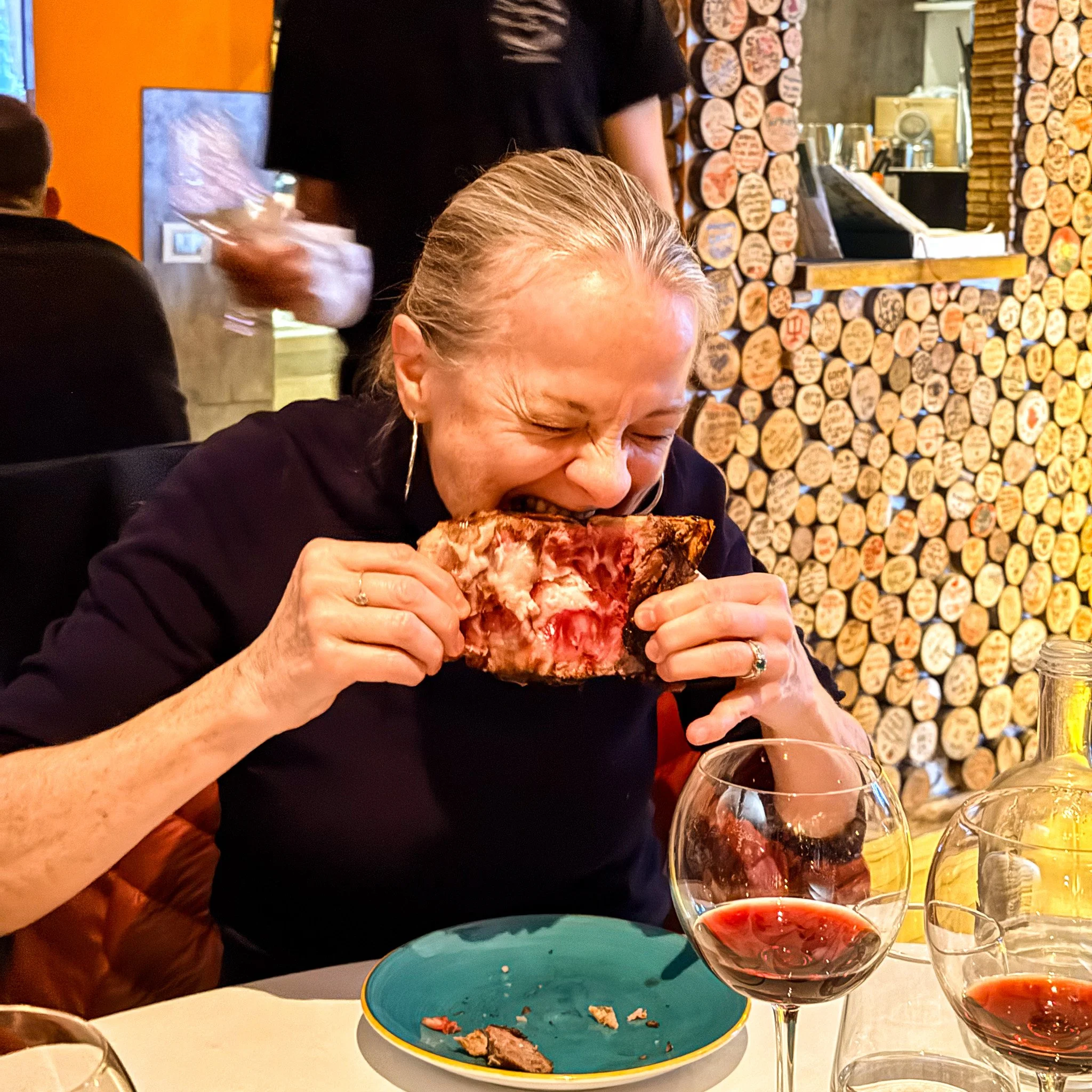
They received us warmly, as Italians always do. Dining out in Florence and being taken care of by animated, friendly restaurateurs is one of life’s great experiences. They treated me like they knew me just because I had been in a few hours earlier making the reservation. The food was everything one hopes it will be—gnocchi, spinach, generous salads for starters, and then came the main event, the steak. We had to decide how thick we wanted it and after we held up forefingers and thumbs spread as wide possible, a massive chunk of wood fired meat arrived. They cut it up in front of us as we ogled it like a pack of circling hyenas before a fallen water buffalo. Paired with a couple of bottles of local Tuscan wines of quality, it was an intense experience and we could barely finish. The waiter taking care of us insisted that someone eat the meat on the bone, insisting it was the best part. He had thrown down the gauntlet. We demurred, all but Marie, who was not about to let that bone go unfinished.
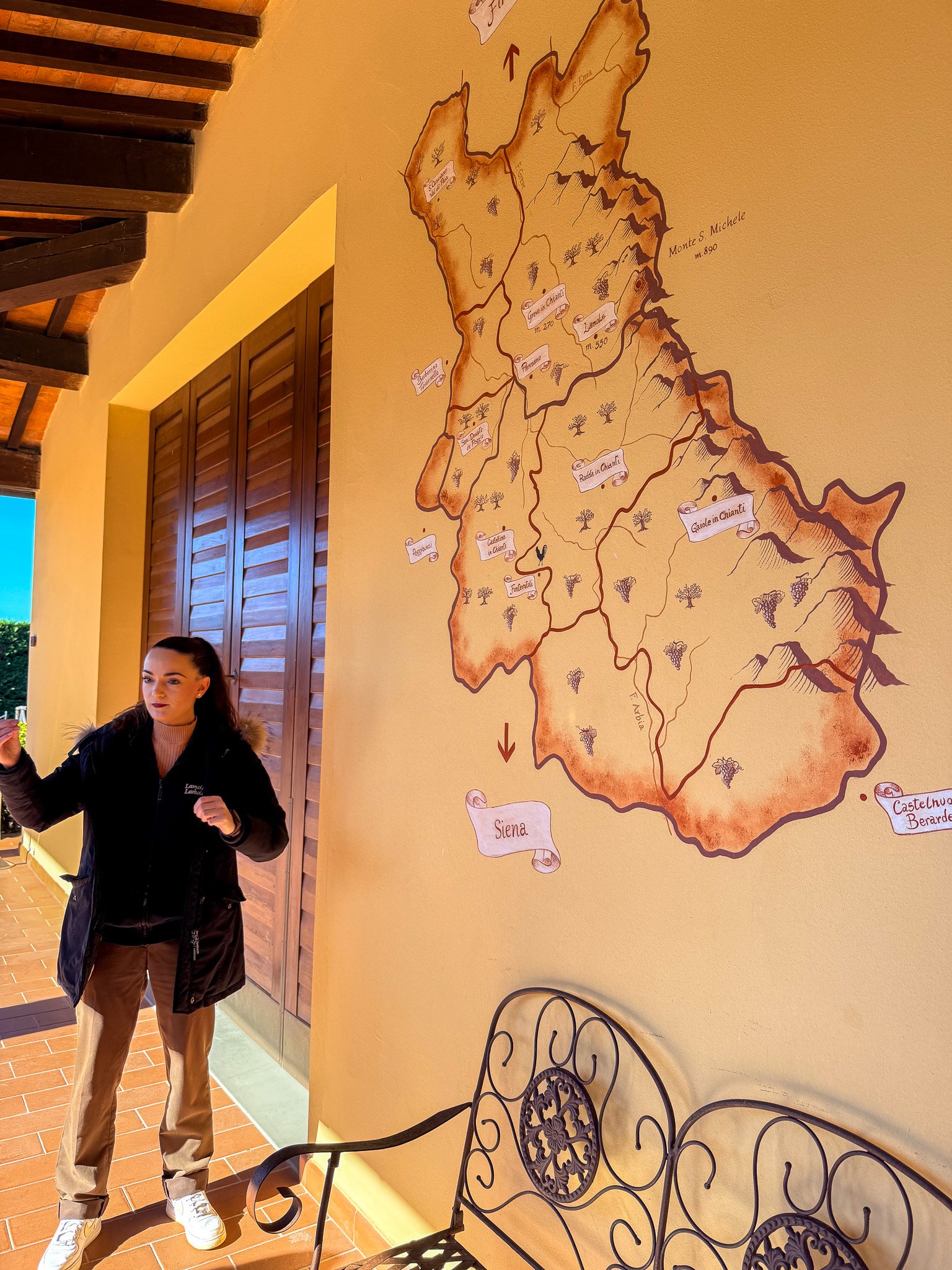
The next morning after another visit to the breakfast room (thinking, as I ate my soft-boiled egg staring upwards, hey, maybe I should paint my apartment ceiling…) the garage brought my car back. I had a drive up into the hills ahead of me. I would meet everyone at the first of the two estates that we were visiting that day, Lamole di Lamole, in Greve in Chianti. Lamole di Lamole is a small historic winery whose cellars were built in the 1300s. Lamole means ‘blade’ in Italian and refers to the repeating undulating hills receding off into the Tuscan mist.
I left the hotel and trickled down the same street I had two days before. It was just as crowded with tourists, but somehow I was less fearful this time. The GPS guided me as it had before with a series of ridiculous instructions, left, left, left, right, cross the bridge, etc., but I felt a bit more confident as I drove. When I crossed the Ponte Ella Grazie bridge and was instructed to turn right into a giant fenced off road, an impossibility, I opted to go left with the rest of traffic. I’m smart like that. And it didn’t take long before I was finally on the rural highway climbing up into the hills of Tuscany, twisting, turning, catching peek-a-boo views of the vineyards, olive groves, and aging cypress and arbor vitae lined up like soldiers on the tops of the distant hills.
The Audi’s navigation system beeped gently at me whenever I exceeded five kilometers over the speed limit which changed quickly and often. It was annoying but necessary to prevent me from the feared run in with Gianni-Law. This wasn’t the real threat, though. As I came off of a curve and I looked up into my rearview mirror, another car blasted up on me and then around me going at least 50 km over the speed limit. And then another, and still another. Complete disregard for the speed limit, but more impressive was the absolute lack of fear of being ticketed. There are speed cameras all over Tuscany as I would come to discover. They are marked by little signs with old fashioned police helmets like the British police used to wear. I would also discover that no matter where I was, on small roads or larger highways, the Italians all seemed to know where these cameras were and they would slow down just before passing them and then stomp on the accelerator back to light speed.
Unfortunately, there are relatively few places to pull over and get the F out of the way and I would end up with some aggravated Karen behind me (Apologies to the Karens in my life) until I could find a patch of dirt to ditch into. I realize that I sound like an old man, but I was driving at what I considered normal speeds, often going over the speed limit, my car beeping at me non-stop. I felt like a frightened seal looking for a rock to hide behind while being pursued by a great white shark.
I arrived at Lamole di Lamole ten minutes late. The crew hadn’t arrived yet. I stepped into the farmhouse tasting room and said hello to the young woman who was giving us our tour. She had clearly been waiting for my arrival but welcomed me and introduced me to another couple who had also obviously been waiting. I didn’t realize that there would be others and I immediately felt bad. I sat near them apologizing profusely for delaying their day and as we struck up our conversation I learned that they lived in Switzerland, but she was Ecuadorian and he was British, they both spoke Italian, and they had driven from their home to come taste the wines of Tuscany. This is the fun of travel, meeting strangers and hearing how other people live lives that you would never think possible for yourself. Mark, Marie, Eric, and Patricia followed me in shortly after, as they had been delayed by lycra-clad cyclists who dominate the roads in this part of Tuscany (Who can blame them, the scenery from a bicycle must be bucket-list level amazing.) Finally we began the tour and our guide was fantastic. Although she was young, she was clearly experienced and had been giving tours for a few years, and it showed. She answered our questions and never made anyone feel less-than. I made mental notes hoping that I might be able to do this job, too, someday—maybe here in France after I finish my WSET Diploma. Needless to say the property, the cellars, the vineyards we were able to walk through, and of course, the actual wines, were high-quality. It’s the cleanest barrel room I have ever been in and that’s saying something.
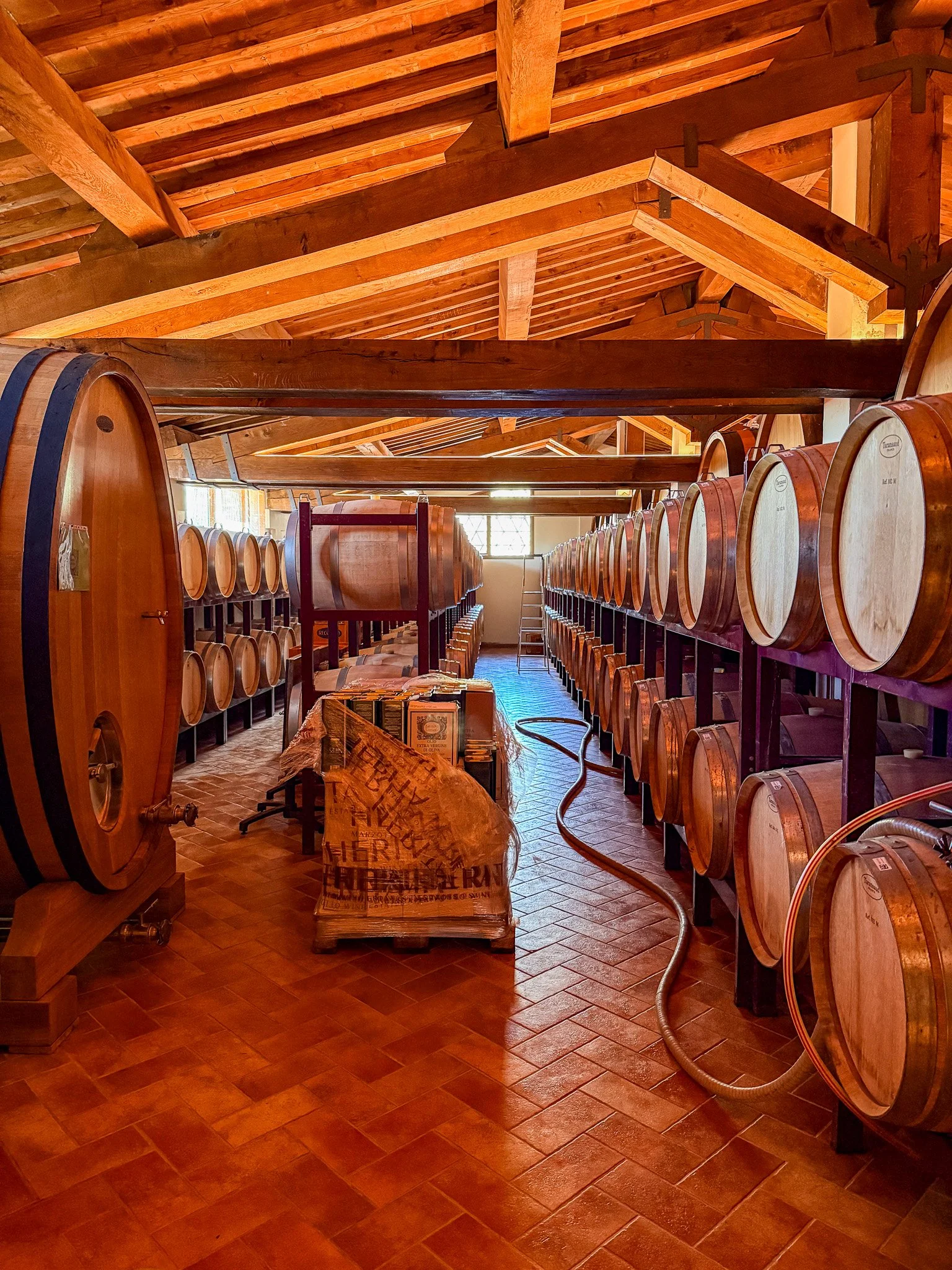
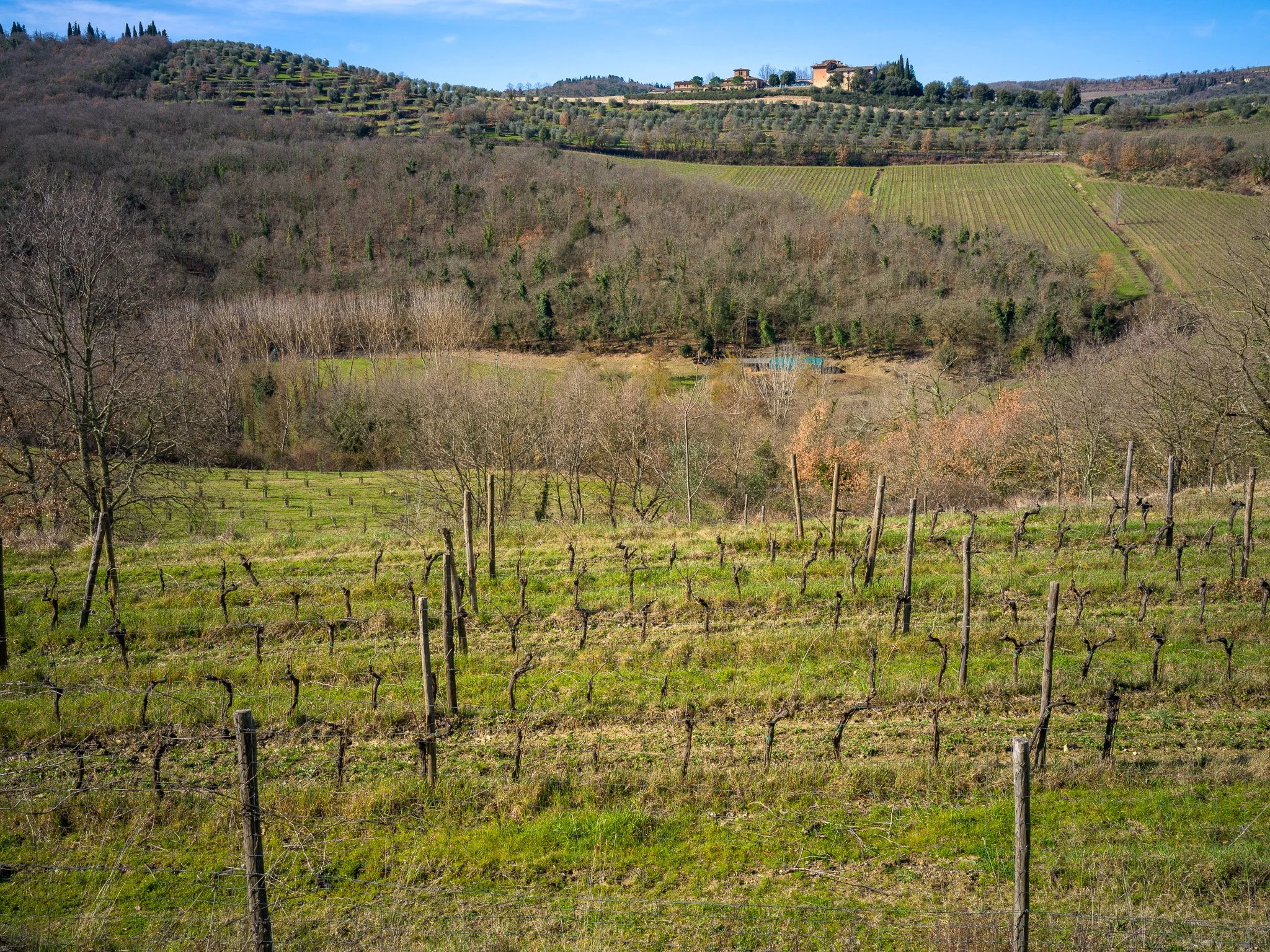
The second property we visited was Castello Volpaia in the tiny village of the same name, located in the Castelvecchi region of Chianti. The entire historic village was purchased in 1973 and converted into one giant production facility. Every building in the entire town was owned by the winery and while it maintained its historic charming 14th-century look and feel—exterior walls peeling of ochre- and Venetian red-colored paint, exposed stone, and failing shutters with missing slats—inside these buildings were state of the art winery-technology. Our guide, Francesco, would lift the metal latch on a double-size barn door and swing it open to reveal spotlessly shiny and massive tanks of stainless steel with refrigerated jackets surrounding them to keep the wines at very specific temperatures as they aged. We went deep into the underground cellars and there we saw massive oak foudres, or 900+ liter holding tanks aging the Chianti Classico wines. We went in one building and after descending into the cellars we came back up and out of another building. It was vast underground complex and an incredible experience to pass through. We made our way back to the tasting room and Francesco asked us to follow him up some brick stairs into a tight corridor where he unlocked an ancient wooden door, revealing a an ancient library-like room. Only the shelves were full of bottles dating back into the 1950s. There was a giant oak table in the center of the room and this is where we would be tasting their wines. Again, they did not disappoint.
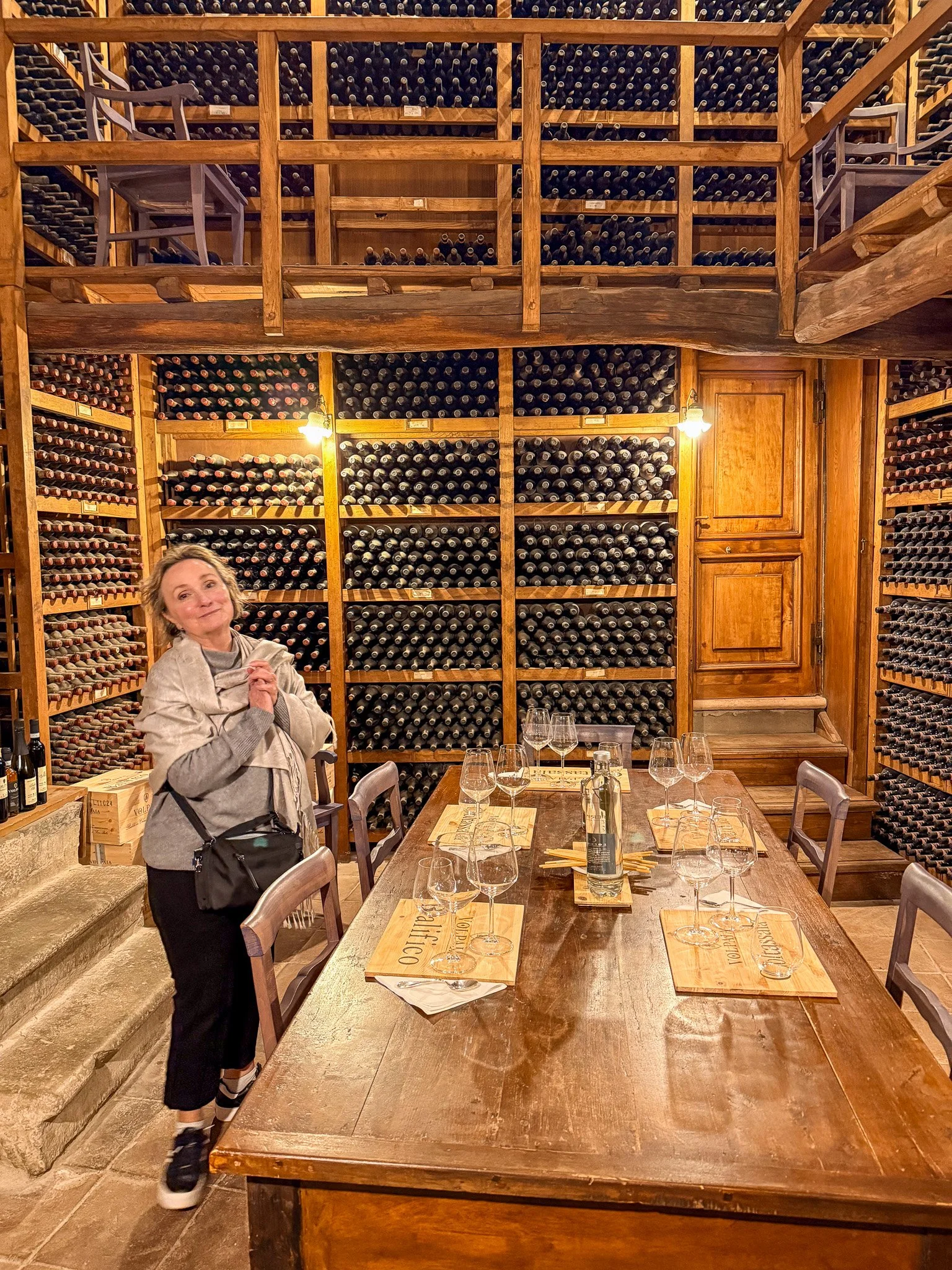
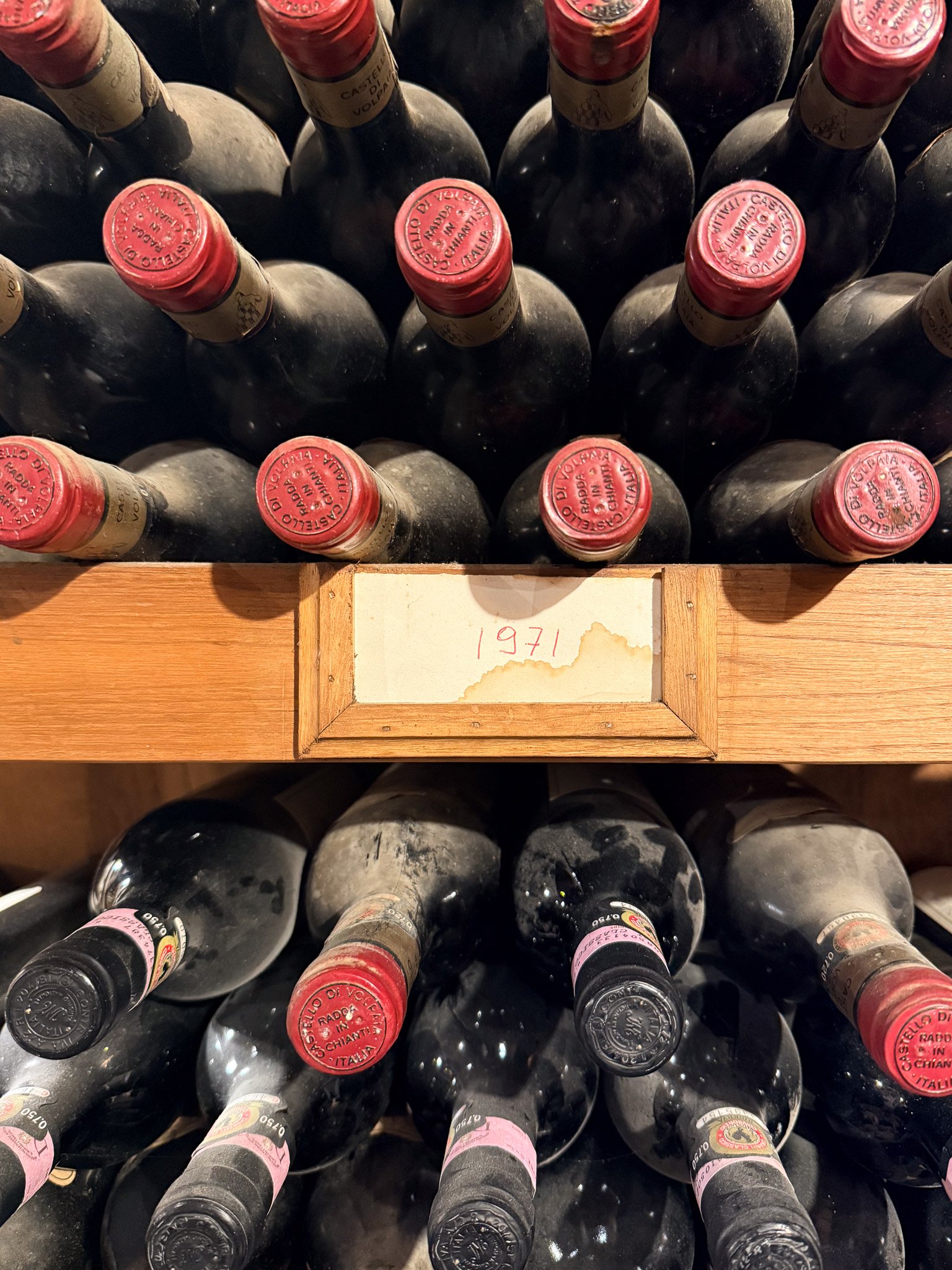
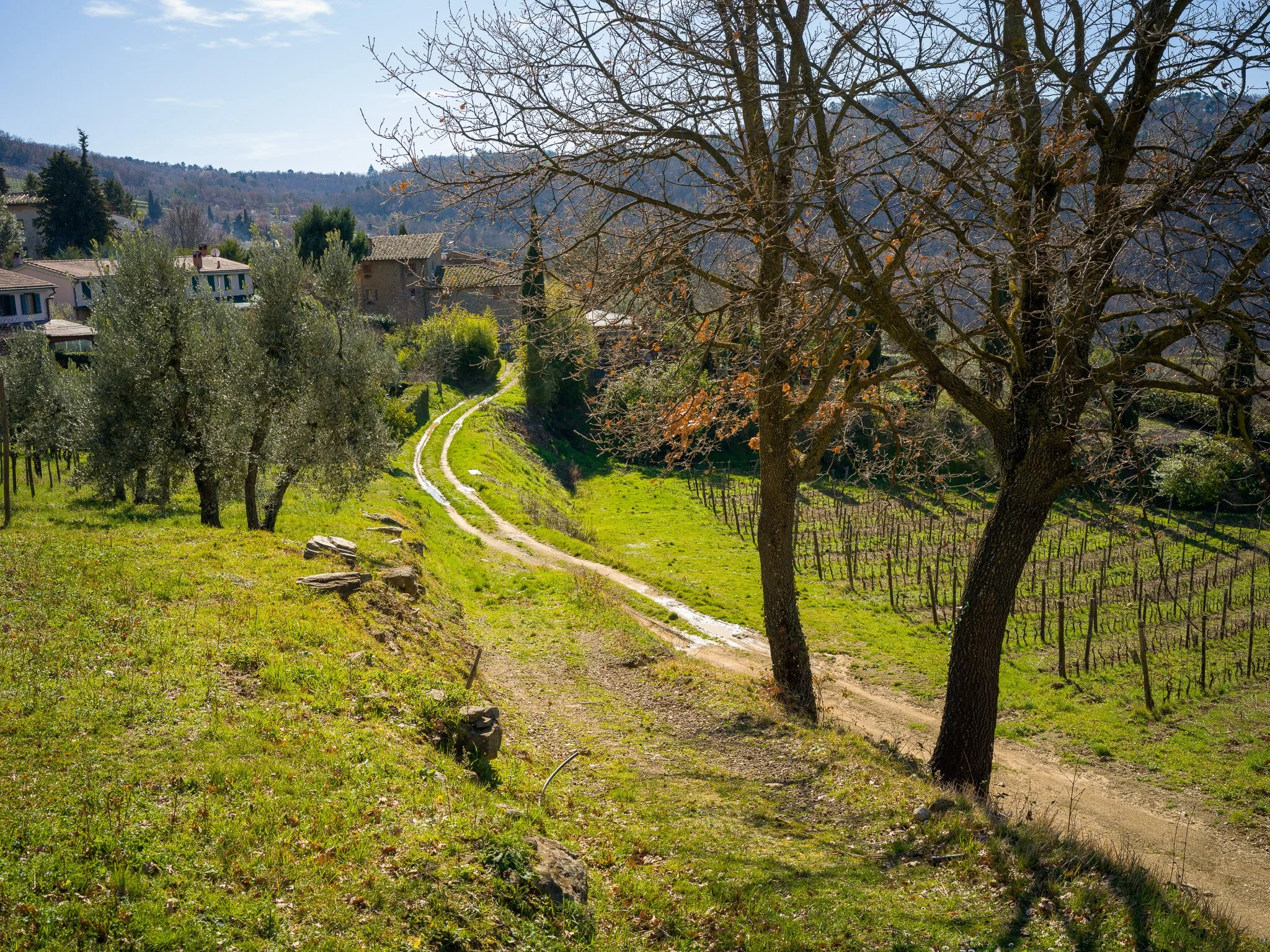
Francesco invited us to return for harvest and said he would gladly put us to work. He lives in the village and had shown us the window to his apartment as we walked by, apparently they provide lodging for their employees in the town or they have issues finding workers. The town is beautiful but quite remote. During the season there is also a restaurant and a cafe open. There is a series of small villas available to rent and everyone salivated at the chance to come back and stay for an extended period. He then told us we were free to wander around the town and told us where the best view was, so we worked our way up a steep hill to that viewpoint. Here is what we saw.
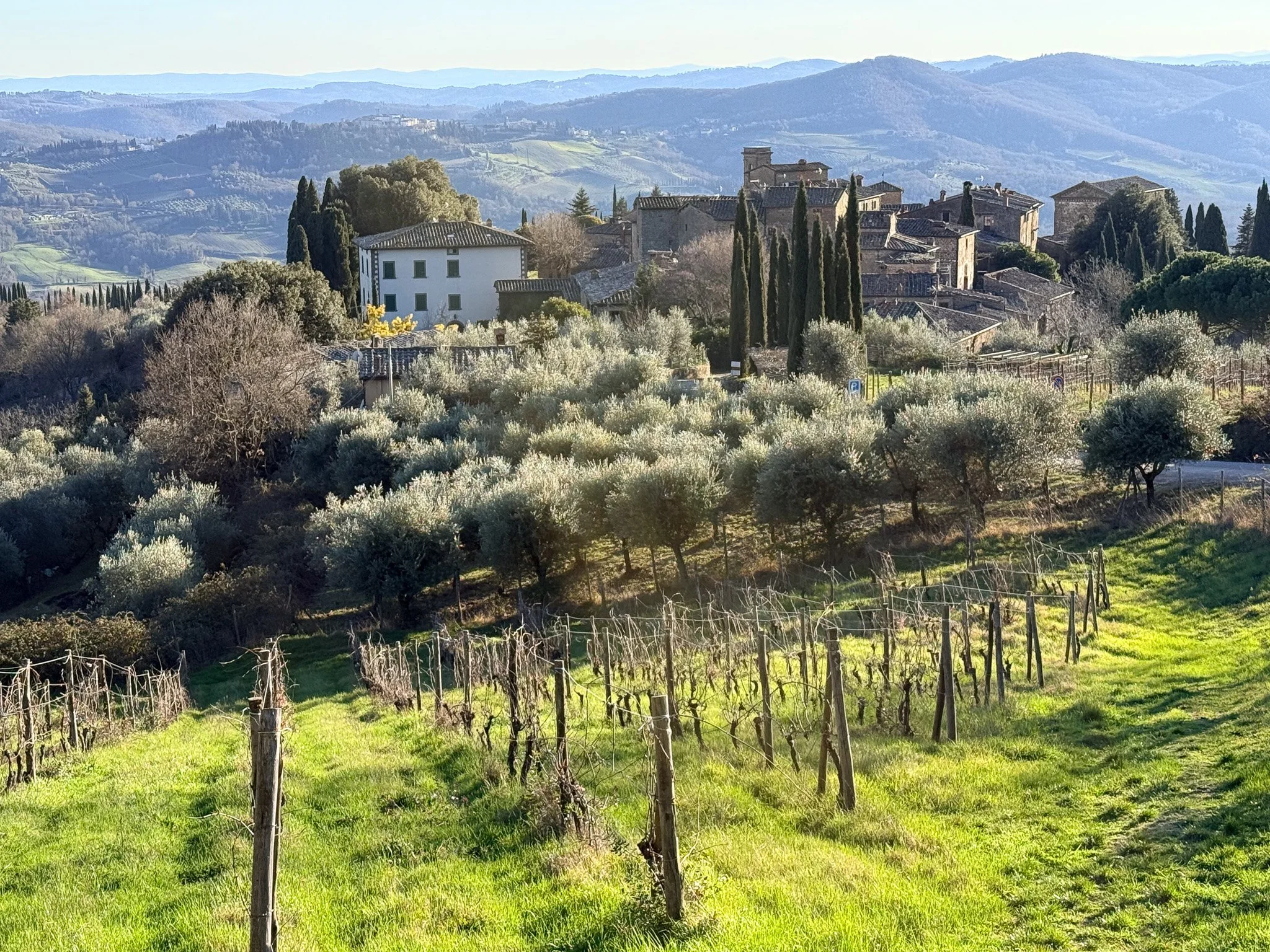
The small village of Volpaia in Chianti, Tuscany
It was an amazing day and we closed it out by first helping Marie clean her shoe off from a massive pile of dog shit she had stepped in when were admiring the view. Yes, travel. It’s the best. Then we went to dinner in Greve. Nothing special as far as the food went, but it was local, and we saw long tables full of multigenerational families enjoying their Saturday night dinner together; grandparents, children, and their harried-looking parents. We had wandered around Greve itself ahead of time and it was quite charming. I now realize there is a lot of meat in this blog post.
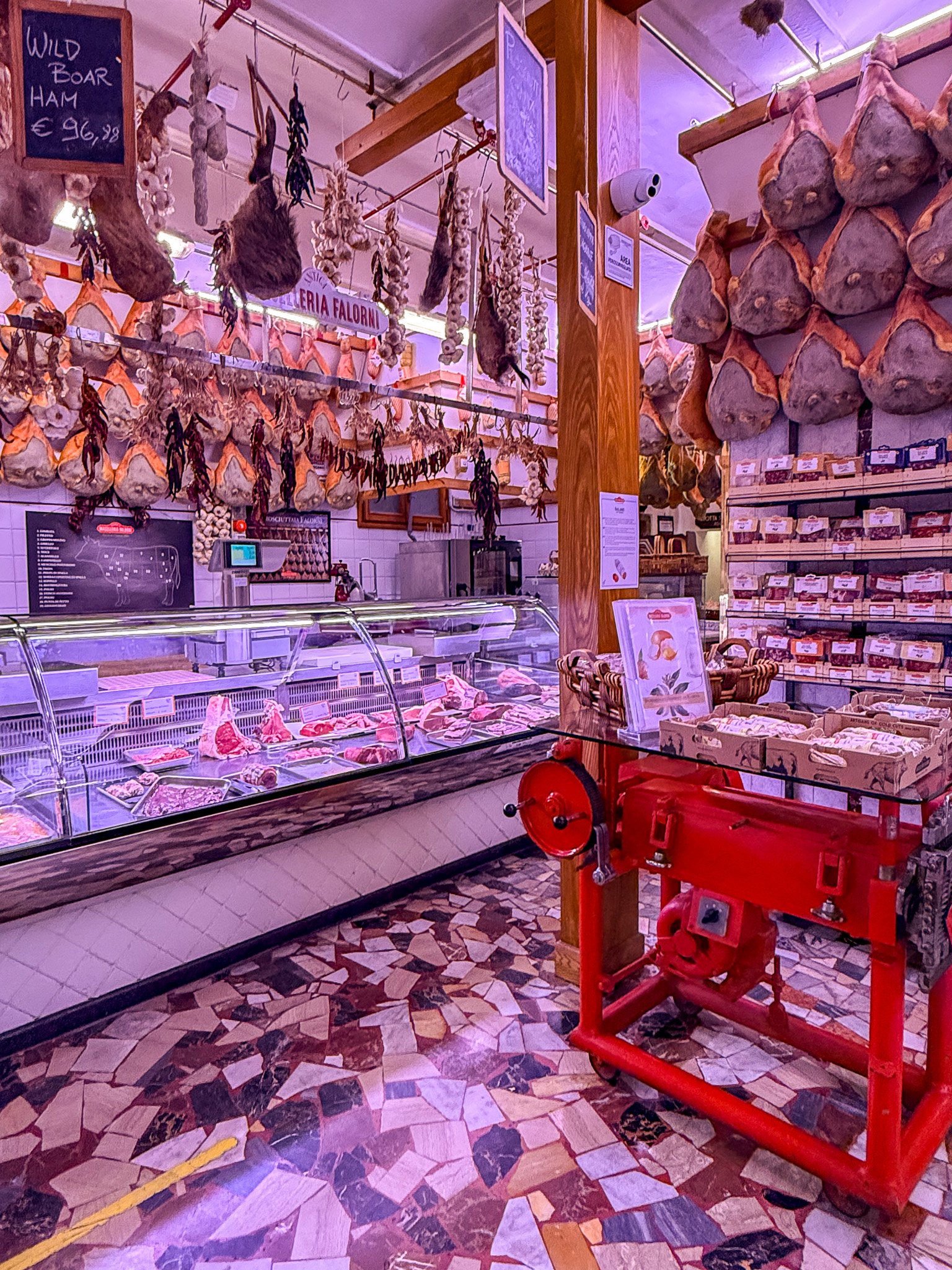
A butcher shop in Piazza Matteotti in Greve in Chianti
The gang headed back to their castle and I prepared to make my way back down the hill to Florence in…the…dark. My brights turning on and off as I swung around blind curves. Again, I was absolutely blasted off the road several times by tiny cars going the speed of sound. My heart beating out of my chest until I saw the lights of Florence in the distance. And as I made my way into the city I felt like I had been steel-fired and cold-hardened with new courage and I could now handle the Florence traffic. I drove straight to the parking garage with no issues. They asked me if I wanted a lift back to the hotel, which I now realized was just a few short blocks away by foot, so I said no, I’d walk. It was midnight and the streets were quiet other than a few bars that were still going. I made more photographs on the way back before I fell into bed, happy, satisfied, and basking in the glow of post-travel success.
The final post from this trip, Part 3, next time…